Wildflower Walk Activity Pack for Spring Homeschool Days
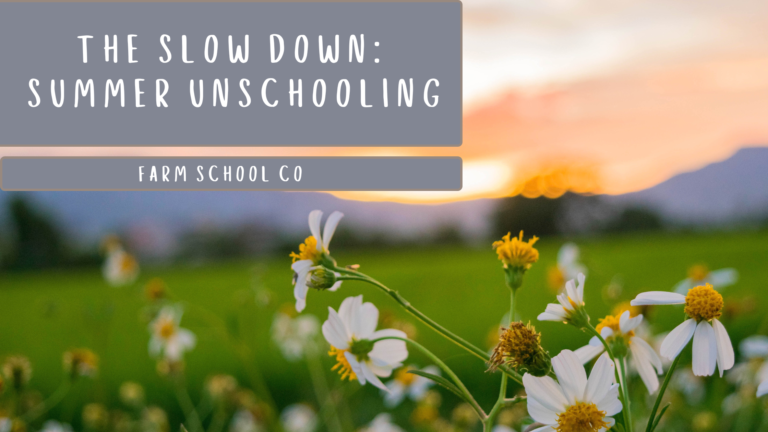
Spring in the Midwest—and everywhere else—is a masterclass in resilience. One day you’re looking at a brown, dormant field, and the next, a dusting of “spring beauties” or “purple dead nettle” has transformed the landscape.
For the busy homeschool mom, a wildflower walk is the perfect “reset” button. It’s a way to hit your science goals, get the sensory input the kids need, and breathe in a little fresh air yourself. But if you want to move beyond a simple stroll and into some observation-based learning, here is a simple “Activity Pack” of ideas you can implement today.
1. The “Parts of a Bloom” Scavenger Hunt
Instead of looking for specific species names (which can be tricky for beginners), look for botanical features.
-
The Mission: Can you find a flower with five petals? What about a flower that looks like a bell? Can you find a “cluster” (many tiny flowers on one stem)?
-
The Goal: This builds the “eye” of a scientist. By noticing the structures, children are learning the basics of plant identification before they even pick up a field guide.
2. Color Matching with “Paint Chips”
Grab a few free paint chips from the hardware store in shades of green, yellow, pink, and purple.
-
The Mission: Take the chips on your walk and try to find a flower or leaf that perfectly matches the “Sage” or “Rose” on your card.
-
The Goal: This encourages kids to look closer at the subtle variations in nature. It’s a great way to bring out the realistic watercolor tones we love to focus on in our journals.
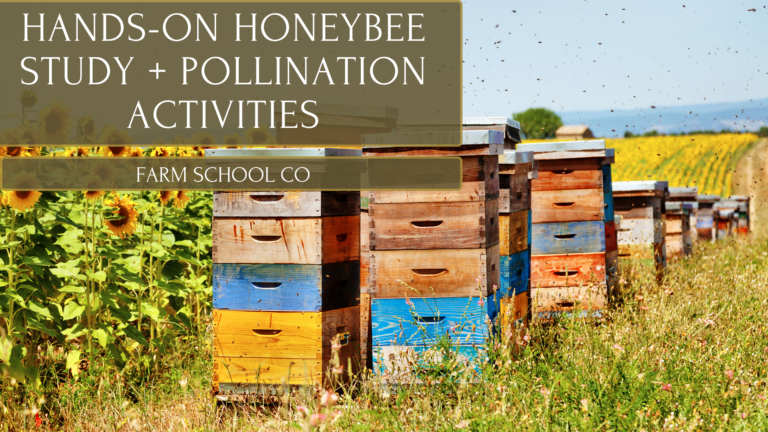
3. Pollinator Patrol
Wildflowers aren’t just pretty; they are a bustling workplace.
-
The Mission: Stand still by a patch of flowers for three minutes. Count how many “workers” visit. Is it a honeybee, a bumblebee, a butterfly, or a tiny hoverfly?
-
The Goal: This introduces the concept of Ethology (animal behavior) and ecology. How does the insect interact with the flower? Does the flower bend under its weight?
4. The “Micro-Portrait” Sketch
Since we don’t ship physical tools like magnifying glasses, we encourage kids to use their “eagle eyes.”
-
The Mission: Choose just one tiny wildflower. Instead of drawing the whole field, draw just that one flower as large as your hand in your nature journal.
-
The Goal: Focusing on the “Micro” helps children notice the tiny veins in a petal or the dust of pollen on a stamen.
Expand the Walk into a “Unit”
If your walk sparks a deeper interest, this is the perfect time to try one of our Nature Studies.
A Note for the Farm School Mom:
Don’t worry if you don’t know the names of every “weed” you see. In fact, it’s often better for your kids to see you say, “I don’t know the name of that one yet—let’s look at the leaf shape and figure it out together.” You aren’t just teaching them about flowers; you’re teaching them how to learn.
What’s blooming in your neck of the woods right now? Grab your journals and let’s head outside!
Recommended Products
Honeybee Nature Study Butterfly Nature Study Strawberry Nature Study
Amazon Picks