The Power of Tactile, Multisensory Learning in Early Elementary
Combating Screen Fatigue: Why Touch Matters in a Digital World One of the most talked-about trends this school year is the intentional return to tactile, child-led learning. In an era dominated by educational apps, tablet games, and online video classes, parents are noticing a distinct rise in screen fatigue and a drop in long-term retention. The truth is, young minds do not absorb the world through a glass display. Children retain information best when they can touch, manipulate, dissect, create, and even taste the subject matter.
When a child sits down with a screen, they are passive consumers. But when you drop a physical magnifying glass into their hands, pull out a set of watercolors, or head into the kitchen to mash fresh ingredients, they instantly transform into active field scientists. Moving away from digital platforms toward physical, rich, open-and-go units keeps curiosity incredibly high, deepens family connection, and keeps teacher preparation time remarkably low.
Why Multi-Sensory Science Simply Sticks When children use all five senses to dissect a concept, the lesson stays with them for life. Investigating botanical structures stops being a chore and becomes a genuine adventure when it is paired with active spatial games, raw materials gathered directly from the backyard, and beautiful artisan crafts. By letting kids physically interact with the lesson—whether they are counting microscopic structures, observing natural chemical reactions, or extracting raw pigments—you turn abstract terminology into concrete knowledge. It moves education entirely off the computer monitor and drops it right onto the kitchen table.
Step into the Outdoors This Week
Ready to invite that rich, organic rhythm into your home and experience the joy of a true seasonal nature study? Discover
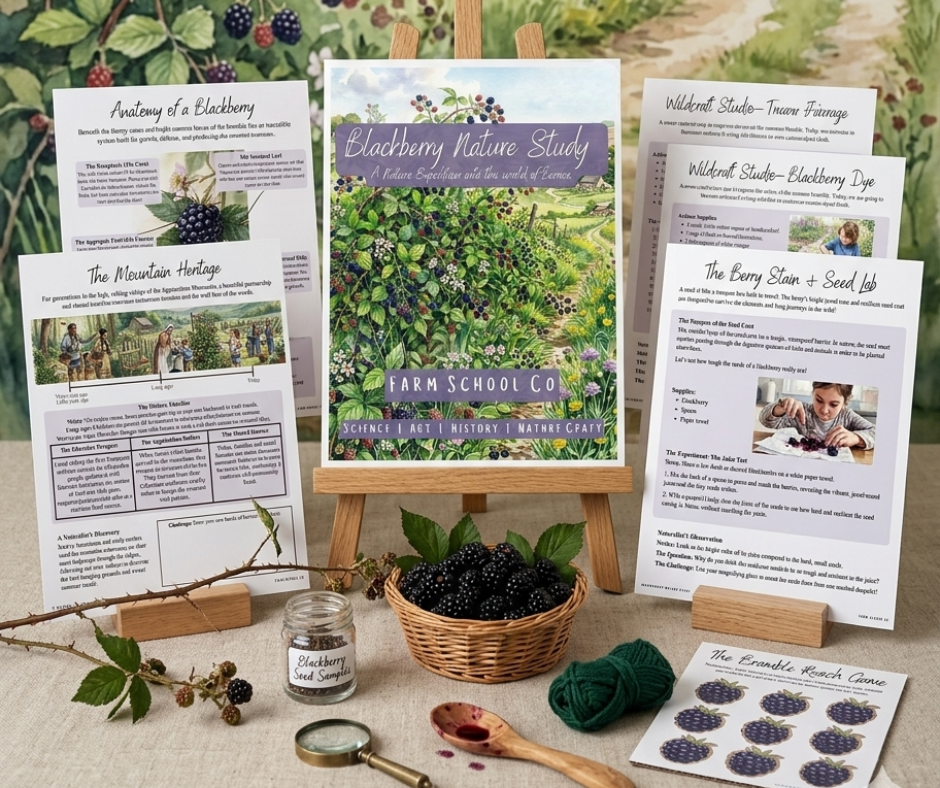
The Bramble Scout: Blackberry Nature Study from Farm School Co. Built specifically for curious children ages 6–9, this comprehensive, beautifully illustrated curriculum breaks down the complex science of botany, geography, and ecology using pure tactile wonder.
Across a gentle, 10-day learning arc, your young naturalists will explore the resilient world of wild berries through multi-sensory activities, including:
- The Wild Fruit Dissection Lab: Use a magnifying glass and a simple toothpick to pull apart a real blackberry, separating individual, juice-filled drupelets to inspect the pale, cone-shaped receptacle core and uncover the microscopic seeds hidden within.
- Bramble Network Botany: Learn the fascinating difference between true thorns and downward-hooked skin outgrowths called prickles, and map out why the plant relies on a second-year cane (a floricane) to produce its heavy, midnight-black harvest.
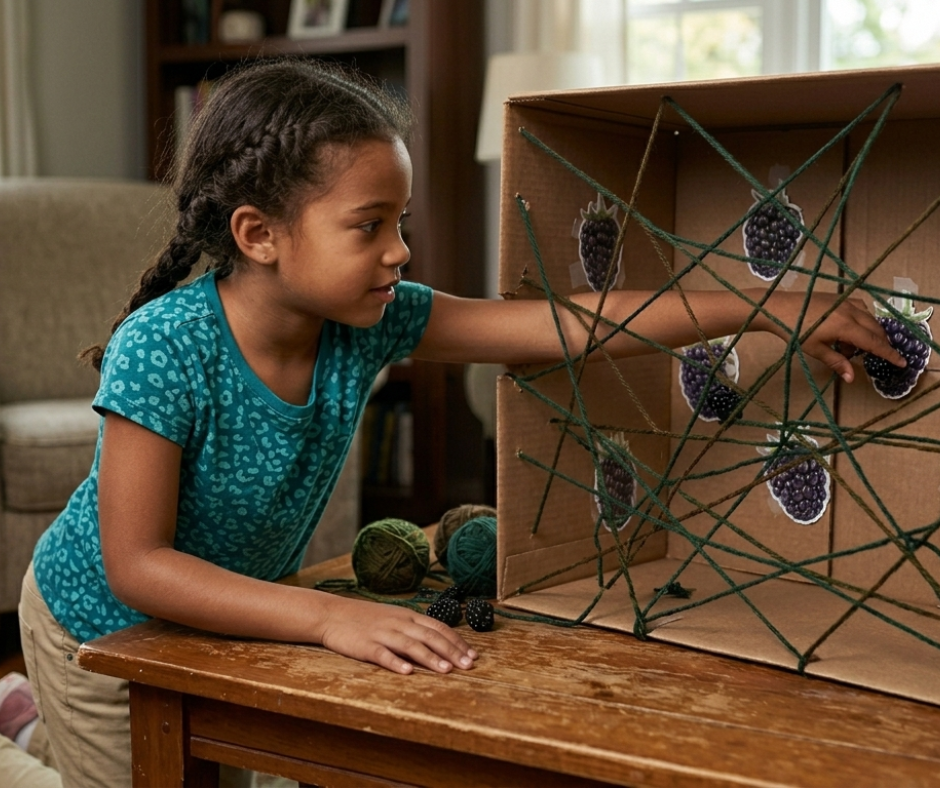
- Ecology & The Forager’s Reach: Bring active play indoors with a physical, yarn-woven “Bramble Reach” maze that challenges children to practice the careful, spatial focus required by wild woodland animals to harvest sweet fruit without getting pricked.
- Artisan History & Kitchen Labs: Trace the deep history of Cherokee foragers and Scots-Irish settlers across the misty ridges of the Appalachian Mountain region. Then, step into the studio to extract natural purple pigments for a custom juice tie-dye project before baking a classic, honey-sweetened farmhouse crumble to study the science of taste