the Summer Slide
How to Beat the Summer Slide Without Losing the Summer Fun
Summer learning loss, often called the “summer slide,” is real. Research has shown kids can lose a meaningful chunk of the academic gains they made over the school year during a long break, especially in math and reading. For homeschool families, that’s worth paying attention to, but it doesn’t mean summer needs to look like school. Here’s how to keep learning moving without sacrificing the actual point of summer.
Why the Summer Slide Happens
Skills like reading fluency and math fact recall work a lot like physical fitness: they fade without regular use. Ten weeks with no reading and no math practice is enough time for a child to lose ground, particularly in the specific, practice-dependent skills like multiplication facts or reading stamina, rather than in broader understanding or reasoning.
The good news is that preventing this doesn’t take much. Most research and experienced homeschool parents point to the same conclusion: short, consistent practice, as little as 15 to 30 minutes a day, is enough to keep skills from sliding backward, without turning summer into another semester.
Keep It Light and Consistent
The biggest mistake parents make trying to prevent summer slide is overcorrecting, building a full daily schedule that looks like the school year, which usually collapses within two weeks and leaves everyone frustrated. The families who actually stick with it tend to keep things simple: a short, predictable routine that’s easy to maintain even on busy or traveling weeks.
A workable version of this might be one page of math practice and 20 minutes of reading each morning, done before screen time or other activities, with no other formal academic work required. Small and consistent beats ambitious and abandoned.
Want an open-and-go plan for hands on learning? We find inspiration for all sorts of nature studies throughout our summer adventures.
Let Real Life Do the Teaching
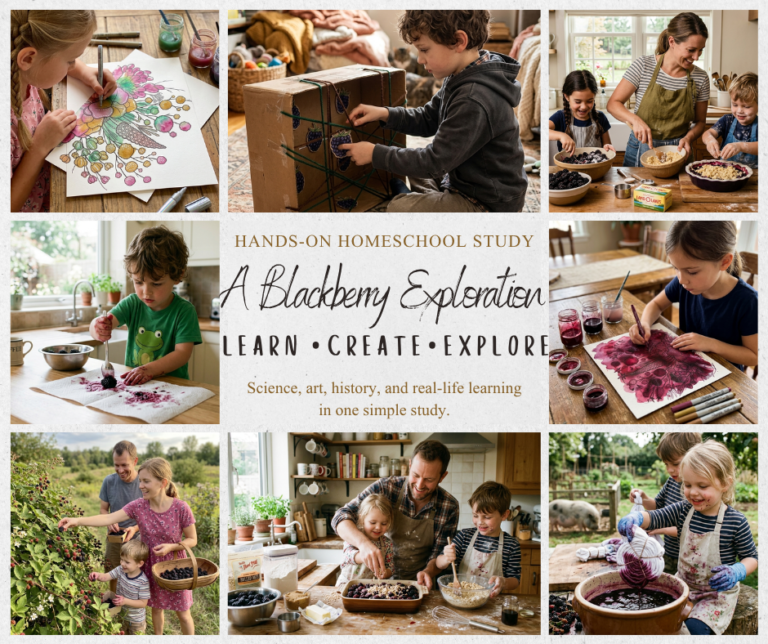
Summer is full of natural opportunities to practice academic skills without it feeling like schoolwork. Cooking and baking involve measuring, fractions, and following multi-step directions. Grocery shopping on a budget involves estimation and addition. Planning a road trip involves reading maps, calculating distances and times, and budgeting for gas and food. Even yard work and gardening involve measurement and basic science.
None of this needs to be labeled “learning” out loud. Involving kids in these everyday tasks, letting them measure the flour, calculate the tip, read the trail map, does the work quietly, and kids tend to engage with it more willingly than a workbook precisely because it doesn’t feel like an assignment.
Make Reading the Non-Negotiable
If you only protect one subject over the summer, make it reading. Reading has the biggest documented drop-off over the summer and the biggest ripple effect into other subjects come fall, since reading fluency underlies nearly everything else a student does academically.
A daily reading habit doesn’t need to be complicated: a set amount of time reading whatever the child chooses (within reason), a weekly library trip to keep the pile fresh, or a family read-aloud time in the evening that works for all ages at once. The goal is exposure and enjoyment, not a reading log with comprehension quizzes attached. A kid who reads happily all summer, even if it’s the tenth book in a graphic novel series, is in much better shape by fall than a kid who avoided reading because it felt like a chore.
Use Screens and Trips as Learning, Not Just Breaks
Screen time and travel don’t have to be the enemy of summer learning. A documentary tied to a place you’re visiting, an educational app used for 15 minutes a day, or a museum stop built into a road trip all count. The key is being a little intentional about it rather than treating all screen time and all travel as purely separate from learning. A single well-chosen documentary or a single museum visit can cover more ground than a week of worksheets, and kids remember it longer.
Watch for Burnout, Not Just Learning Loss
It’s worth remembering that summer serves a purpose beyond academics. Kids, and parents, need genuine rest and unstructured time. A summer with zero academic touchpoints risks real skill loss, but a summer that’s just school with better weather risks burning out a kid’s motivation before fall even starts. The goal is a light touch, not a substitute school year.
If a planned daily practice routine is met with dread every single day, it’s worth adjusting rather than pushing through. Switching formats (a game instead of a workbook, an audiobook instead of silent reading) or dropping to a lighter frequency for a stretch is usually enough to fix it.
A Simple Summer Plan
If you want a starting point rather than building a routine from scratch: 20 to 30 minutes of reading daily, one short math practice session most days (games or apps count), one hands-on real-world activity a week that involves measuring, budgeting, or planning, and a weekly library visit. That’s a realistic, sustainable plan that protects the skills that matter most without eating into the rest and fun that make summer, summer.
By the time fall planning rolls around, a summer built around this kind of light, consistent practice means you’re starting the new year from solid ground instead of spending the first month of school reteaching what slipped away.
Keep up to date with new products and our free newsletter. Visit our home page for more information.