Embrace Wildschooling: Nature-Based Learning for Kids
If your kitchen table currently looks like a graveyard of half-finished worksheets and sharpened pencils that your kids keep dropping “by accident,” you are not alone.
We’ve all been there. You print out a beautifully illustrated worksheet about the lifecycle of a frog, sit your child down, and prepare for a magical moment of education. Instead, you get a kid sliding out of their chair, asking for their tenth snack of the morning, and staring blankly at the page.
There is a collective sigh of digital and paperwork fatigue sweeping through the homeschool community right now. As parents, we’re pushing back against rigid, desk-bound curriculums. Instead, a movement called Wildschooling (or nature-first learning) is taking over, and it’s proving that the natural world makes a much better science textbook than a stack of paper.
Here is how you can stop fighting the squiggles, close the textbooks, and move your core science curriculum outdoors using simple, sensory nature study.
The Problem with “Desk Science”
Kids are built to learn through movement and sensory input. When we isolate scientific concepts to a two-dimensional page, we ask their brains to do double the work: they have to memorize the vocabulary and imagine the context.
When you move science outdoors, the context is already alive. A lesson on ecosystems isn’t a diagram in a book; it’s the decaying log in your backyard that is currently hosting isopods, fungi, and damp soil. The retention drops into place instantly because they can smell, touch, and see the science happening in real-time.
The 3-Step “Nature-First” Science Routine
You don’t need to live near a national park or an old-growth forest to make this work. A backyard, a local park, or even a grassy strip down the street is a fully functioning laboratory. Try this simple, age-adaptable routine:
- 1. Observe (The 10-Minute Micro-Hunt): Give your kids a single, hyper-focused task. Instead of saying “go look at nature,” say, “Find three different types of leaves and look at the veins underneath them,” or “Find a square foot of dirt and count how many ants cross it in two minutes.” Focus breeds curiosity.
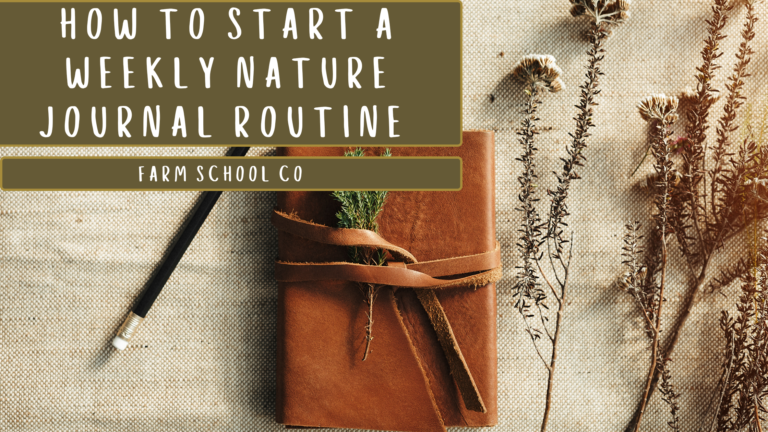
- 2. Journal (Sensory Notebooking): Bring a blank notebook and some colored pencils outside. Have them sketch what they see. If your child is a reluctant writer or artist, don’t sweat it. Let them dictate a sentence to you, press a fallen leaf into the page with a piece of tape, or write down words describing the textures and smells.
- 3. Connect (The Vocabulary Bridge): This is where you connect the fun to formal science. Once they are holding a piece of moss or watching a robin dig for worms, introduce the big words. Talk about photosynthesis, decomposition, or predator-prey relationships. They will remember what an invertebrate is because they actually held an earthworm, not because they matched a definition on a quiz.
Let Nature Do the Heavy Lifting
Moving your science outdoors isn’t about adding more to your plate; it’s about shifting the venue. By letting the backyard do the teaching, you reduce screen time, eliminate the worksheet battles, and tap into the natural curiosity your kids already possess.
Next time you feel a science lesson stalling, close the book, lace up your boots, and head out the back door.