Your First Month of Farm School at Home (Step-by-Step)
The transition from a traditional classroom mindset to a “farm school” rhythm can feel a bit like moving from a paved city street to a winding dirt path. It’s slower, more intentional, and—let’s be honest—a little muddier.
Whether you live on forty acres or have a small garden patch in the suburbs, you can bring the principles of ethology and nature-based learning into your home. If you are starting your first month of Farm School Co. style learning, here is a simple, four-week roadmap to help you find your footing without the overwhelm.
Week 1: Establishing the “Observation Station”
Before you dive into complex science units, you need to train the “eyes of a scientist.” This week is all about setting up your environment.
-
The Task: Pick a “Home Base” window or a specific spot on your porch.
-
The Setup: Place a bird feeder, a water dish, or even just a flat “lookout rock.”
-
The Activity: Spend 10 minutes a day just watching. Don’t worry about names or facts yet. Just notice who the local “residents” are.
-
Mom Tip: Keep your Nature Journals and pencils in a basket right by this spot. Accessibility is the secret to consistency.
Week 2: Mastering the “I Wonder” Method
Now that you’re looking, it’s time to start thinking. This week, we introduce the core of our curriculum: observation-based inquiry.
-
The Task: On every walk or farm chore, use the three prompts: I notice… I wonder… It reminds me of…
-
The Activity: Choose one element—like a budding leaf or a patch of moss. Instead of telling your kids what it is, ask them what they see.
-
The Goal: We want to move away from “cartoon” versions of nature and toward the authentic, realistic details of the world around us.
Week 3: Your First “Science Lab”
By week three, your kids will likely be curious about a specific topic. This is the time to introduce your first formal Science Lab or Unit.
-
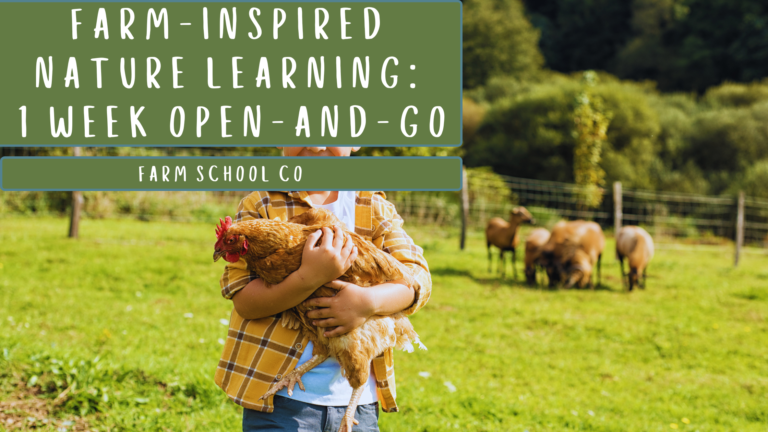
The Task: Choose a topic that matches the season (like “Poultry” in the spring or “Decomposition” in the fall).
-
The Activity: Use realistic watercolor imagery to study the anatomy and behavior of your subject. If you’re studying donkeys, go spend time with Leo (or your local equivalent!) and compare the realistic illustrations to the live animal.
-
The Goal: Bridging the gap between the page and the pasture.
Week 4: Implementing an “Adventure Quest”
Now that the habit of observation is forming, it’s time to add a bit of “mission-based” excitement.
-
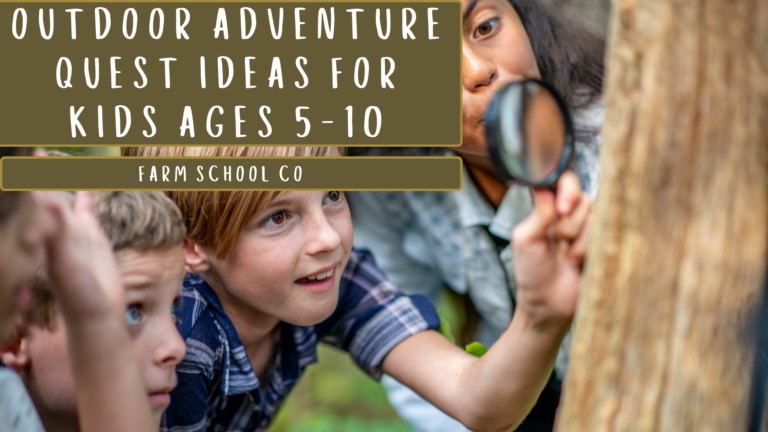
The Task: Introduce a Nature Quest. This is a structured way to explore your land with a specific goal in mind.
-
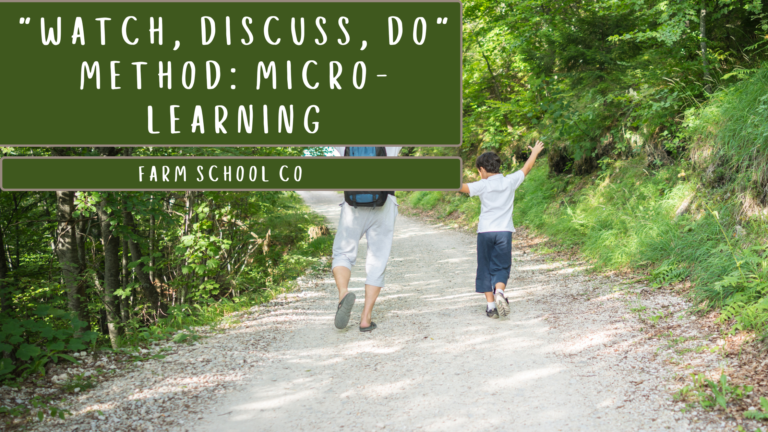
The Activity: Try a “Micro-Hike” or a “Pollinator Patrol.” Let the kids take the lead while you act as the “Field Recorder,” helping them log their findings in their journals.
-
The Goal: Building confidence. By the end of the month, your children shouldn’t just be “playing outside”—they should feel like explorers on a vital mission.
A Note on the “Busy Mom” Reality
If you are balancing a corporate career or a hectic household, remember: consistency beats intensity. You don’t need to spend four hours a day on “Farm School.” A focused 15-minute observation session during a work break is more valuable than a three-hour lesson that leaves everyone stressed.
At Farm School Co., we design our materials to be “open-and-go” for exactly this reason. We provide the realistic art and the scientific prompts so you can simply step outside and begin.
Reflection for the Week: As you start this journey, don’t feel pressured to have all the answers. The most powerful thing you can say to your child is, “I don’t know the answer to that—let’s observe it and find out together.”
Which week of this plan are you most excited to start? Let’s chat in the comments!
Recommended Products
Spring Garden Science Bundle Earthworm Nature Study Honeybee Nature Study
Amazon P