How to teach your kids what a Livestock Guardian Animal is.
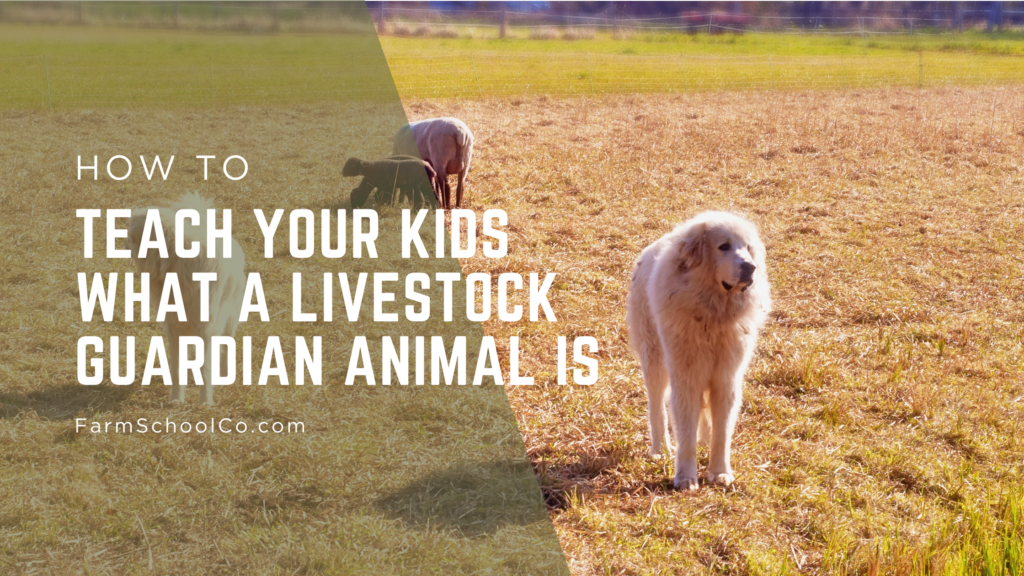
If you’ve ever driven past a farm and seen a large white dog standing quietly in a field, you may have wondered:
Is that dog just a pet?
In many cases, that dog has a very important job. It is a livestock guardian animal.
For young children, the word “guardian” can sound big and serious. But really, a guardian is simply someone (or something) that helps keep others safe.
On a farm, some animals have the job of protecting other animals.
Let’s look at what that really means, in a way kids can understand.
What Does “Guardian” Mean?
A guardian is someone who watches, listens, and stands ready to protect.
Guardians don’t spend their day chasing or fighting. Most of the time, they are calm and alert.
They notice:
- Sounds in the distance
- Changes in the field
- Movement near the fence
- Animals that don’t belong
That calm watching is the first part of protection.
On a farm, livestock guardian animals use their instincts, not training tricks, to protect sheep, goats, chickens, or other animals.
What Animals Can Be Livestock Guardians?
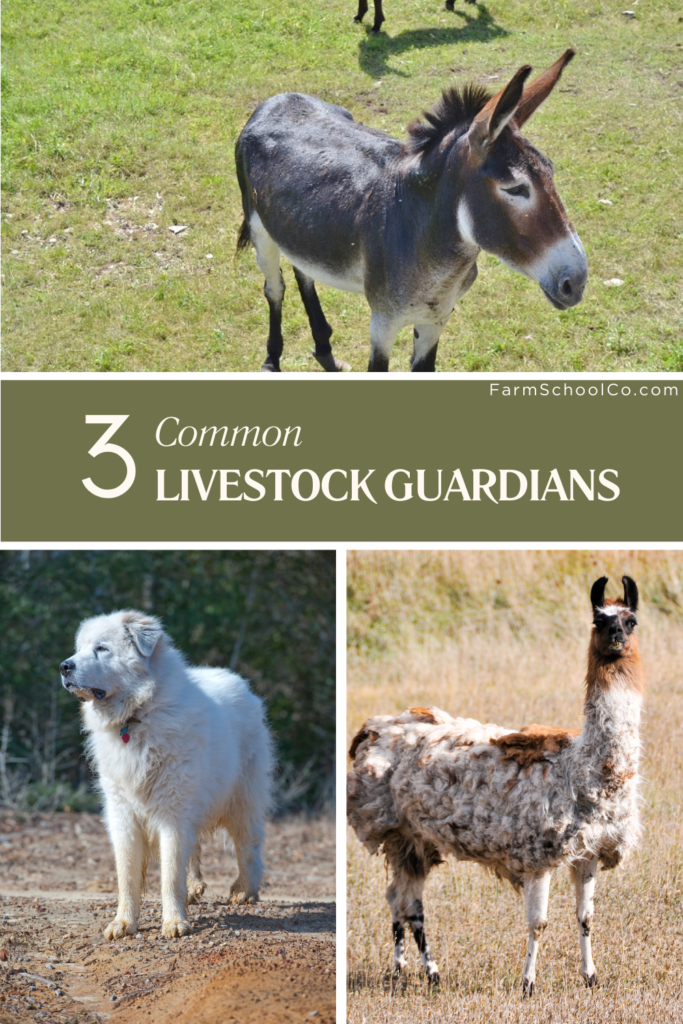
The most common livestock guardian animals are:
- Livestock guardian dogs (LGDs)
- Donkeys
- Llamas
Some farms use one type. Others use layers of protection.
Guardian dogs are especially common. These dogs are not herding dogs. They do not gather animals or chase them into pens. Instead, they live with the animals full-time.
They bond with the flock.
They see the goats or sheep as part of their family.
When something unusual happens, they respond.
What Does a Livestock Guardian Dog Actually Do?
This is where it gets interesting, especially for kids.
Guardian dogs protect in several quiet ways:
1. They Watch
A guardian dog often stands tall and still. They scan the horizon. They notice movement long before humans do.
2. They Listen
Dogs hear sounds at distances humans cannot. A rustle, a bark, or distant movement can trigger attention.
3. They Use Their Voice
A deep bark can warn predators:
“This field is protected.”
Many predators will leave simply because they know the guardian is there.
4. They Stand Their Ground
Guardian animals don’t usually chase far. They stay near their flock. Their job is presence and protection.
In our Farm Guardians Science Study, children explore these protective behaviors through simple observation, movement activities, and hands-on experiments.
Guardian Animals vs. Predators
This is one of the most important concepts for children.
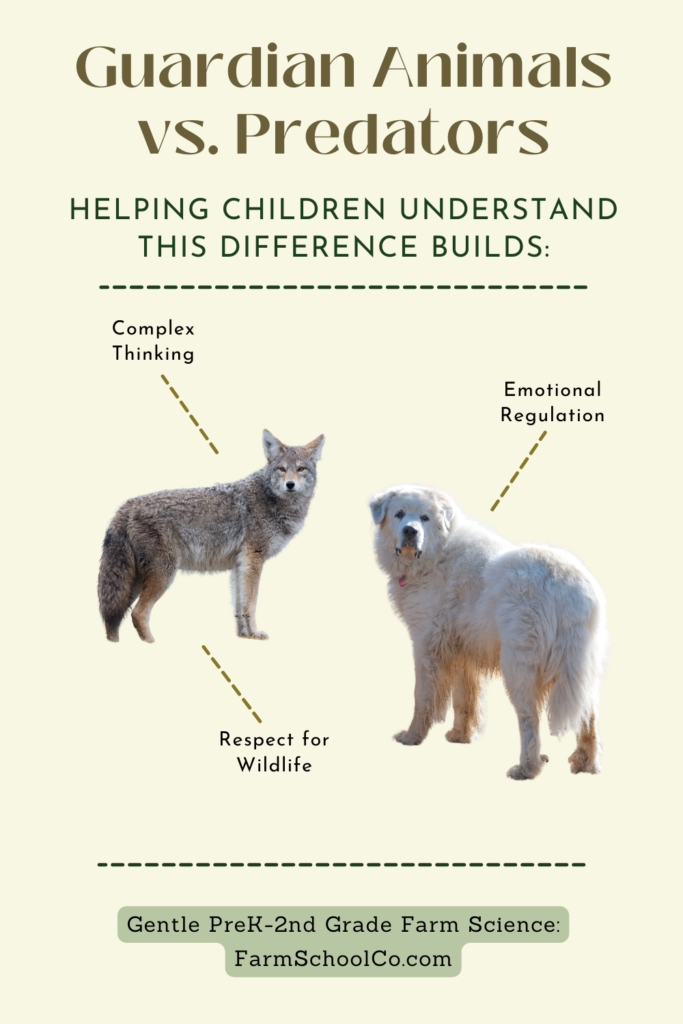
Predators hunt for food.
Guardians protect their group.
Neither is “good” nor “bad.” They simply have different roles.
Helping children understand this difference builds:
- Emotional regulation
- Complex thinking
- Respect for wildlife
If you want a deeper explanation, you can read more about this in our post on predator vs. guardian behavior (internal link placeholder).
How Do Guardian Animals Protect Without Fighting?
Many parents assume protection means aggression.
But most of the time, protection looks like:
- Standing tall
- Barking a warning
- Positioning between flock and threat
- Staying close at night
In fact, calm protection is often more effective than chasing.
This idea is explored more in our Night Vision Short Study, where children learn how guardian animals use their eyes and senses after dark.
Why Do Farms Need Guardian Animals?
On open land, farms can attract:
- Coyotes
- Foxes
- Stray dogs
- Hawks (for poultry)
Guardian animals reduce stress on livestock and reduce loss.
But they also provide something else:
Peace.
Animals that feel safe:
- Eat better
- Rest better
- Grow better
This ties into broader farm science ideas about how animals use their senses to stay safe, something we explore more deeply in The Farm Guardian Complete Collection.
How to Explain Livestock Guardians to Preschoolers
Here’s a simple script:
“A guardian animal is an animal that watches and listens to keep other animals safe.”
Then you can ask:
- What does a guardian use? (Eyes, ears, voice)
- How does a guardian stand?
- What does calm protection look like?
You can even play “Guardian Freeze”:
One child stands tall and watches while others move.
Learning becomes embodied.
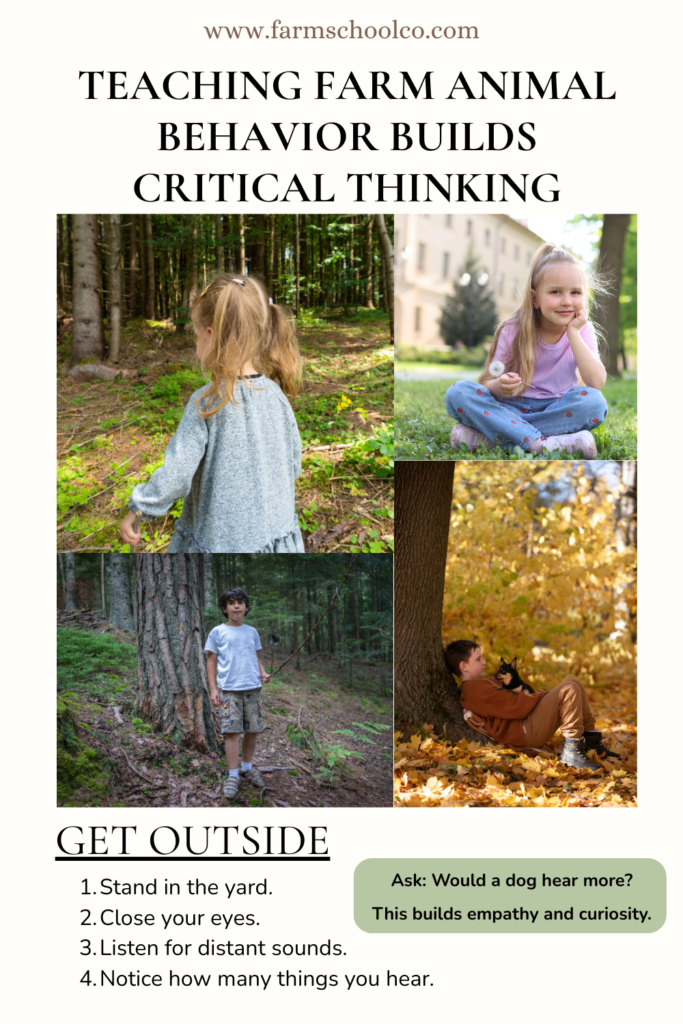
Simple Hands-On Activity
Try this:
- Stand in the yard.
- Close your eyes.
- Listen for distant sounds.
- Notice how many things you hear.
Ask:
Would a dog hear more?
This builds empathy and curiosity.
For more structured activities, the Fences & Perimeters Short Study explores how boundaries and space help animals stay protected.
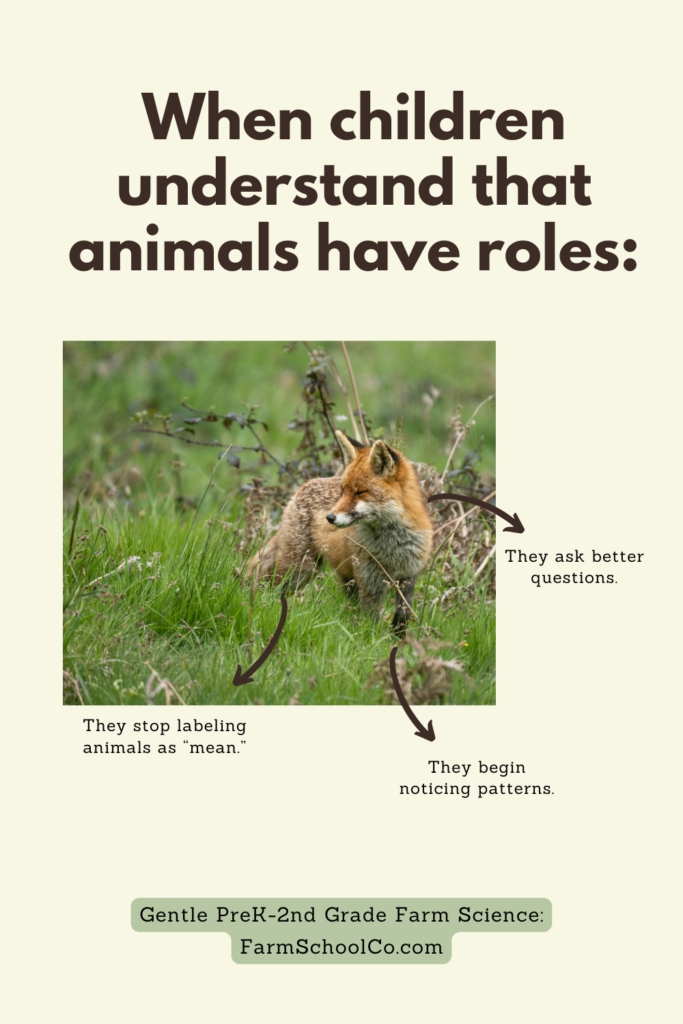
Teaching Farm Animal Behavior Builds Critical Thinking
When children understand that animals have roles:
- They stop labeling animals as “mean.”
- They begin noticing patterns.
- They ask better questions.
That’s real science learning.
Guardian animals offer a gentle entry point into:
- Animal instincts
- Adaptations
- Senses
- Behavior
- Farm ecosystems
And they do it in a way young children can grasp.
Pair this lesson with simple tools for observation and play.
binoculars
Melissa & Doug Let’s Explore Binoculars & Compass Play Set
Figurines for play reenactment
Farm Playset Educational Learning Toy
Books
Farm and Protector Books
Flashlight
Rechargeable Flashlight for Kids
Want the free download?
Enter your email below.