Hands-On Honeybee Study + Pollination Activities
Honeybees are one of the best nature study topics for young learners. They connect science, gardening, ecosystems, and food production in a way children can understand.
This hands-on honeybee study is ideal for preschool and early elementary students and can be completed in 3–5 days.
What Children Learn in a Honeybee Study
- Basic bee anatomy
- The role of honeybees in pollination
- How honey is made
- Why bees are important to our food supply
Keep explanations simple and visual.
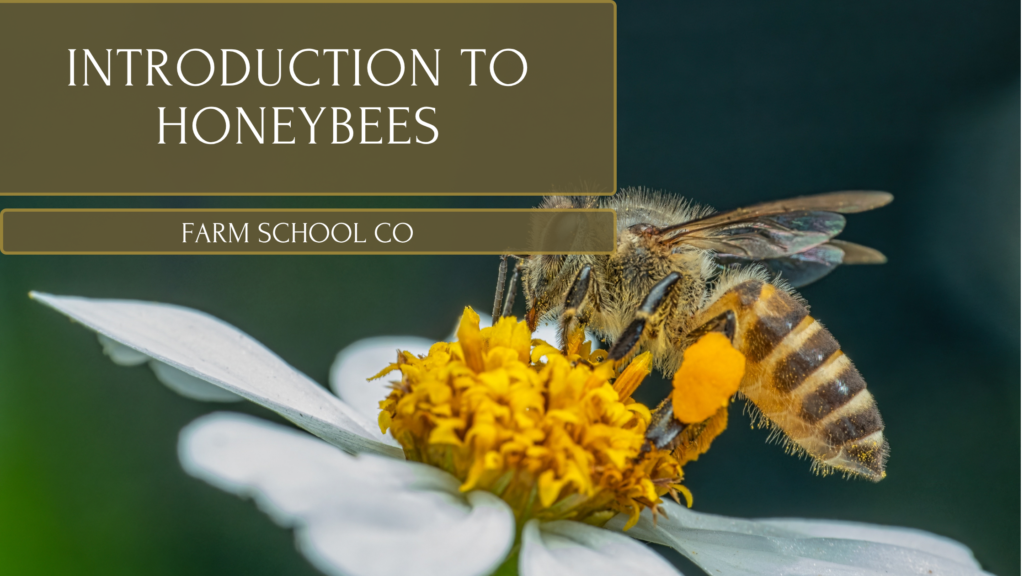
Day 1: Introduction to Honeybees
Teach the Basics
Explain:
- Bees collect nectar and pollen.
- They live in hives.
- They work together.
Introduce simple vocabulary:
- Hive
- Nectar
- Pollen
- Queen
- Worker
Use diagrams or simple labeled drawings.
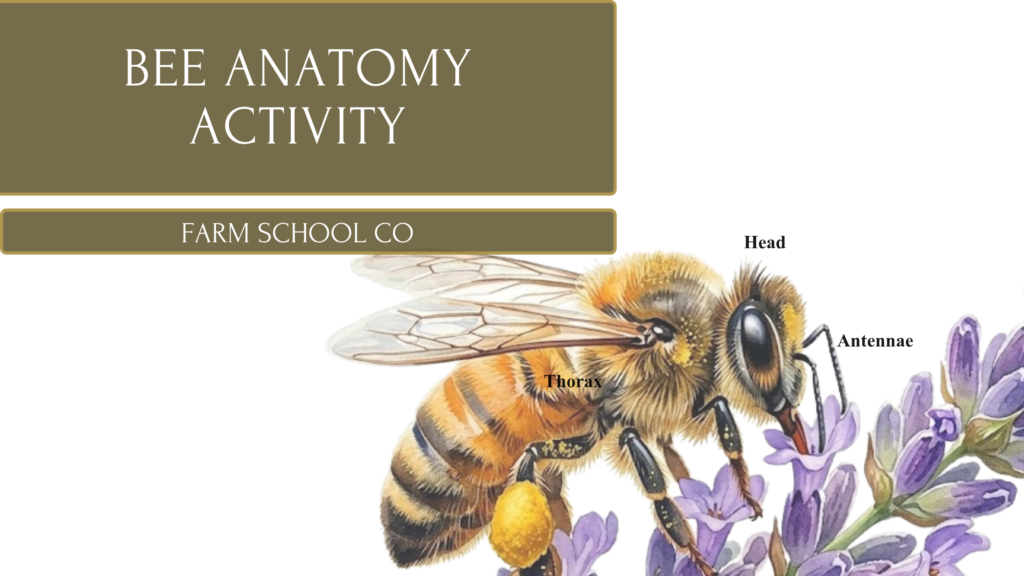
Day 2: Bee Anatomy Activity
Parts of a Honeybee
Teach:
- Head
- Thorax
- Abdomen
- Wings
- Antennae
Activity Ideas:
- Label a bee diagram
- Build a bee with craft supplies
- Use playdough to form body segments
Keep it hands-on.
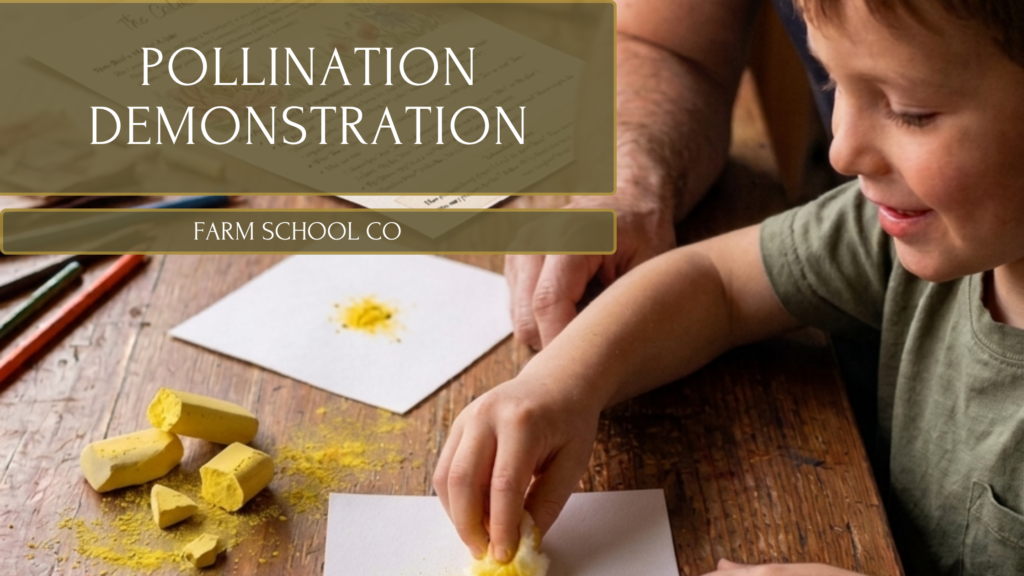
Day 3: Pollination Demonstration
Pollination can feel abstract. Make it physical.
Simple Pollination Activity
Materials:
- Yellow pom-poms or chalk dust (pollen)
- Artificial flowers or paper flowers
- Cotton balls
Steps:
- Add “pollen” to the center of one flower.
- Pretend the bee (cotton ball) collects pollen.
- Transfer pollen to another flower.
- Explain that this helps plants make fruit.
Children understand when they see pollen move.
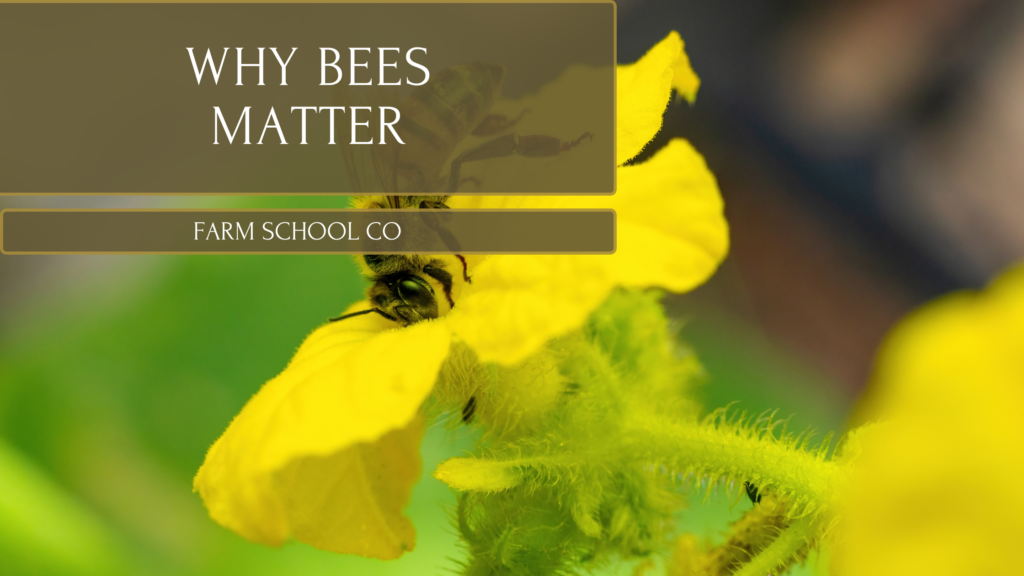
Day 4: Why Bees Matter
Connect bees to real life.
Discuss:
- Bees help fruits and vegetables grow.
- Without pollination, many plants cannot produce food.
You can:
- Look at foods in your kitchen that depend on pollination.
- Sort foods into “bee helpers” and “not bee helpers.”
This makes the lesson practical.
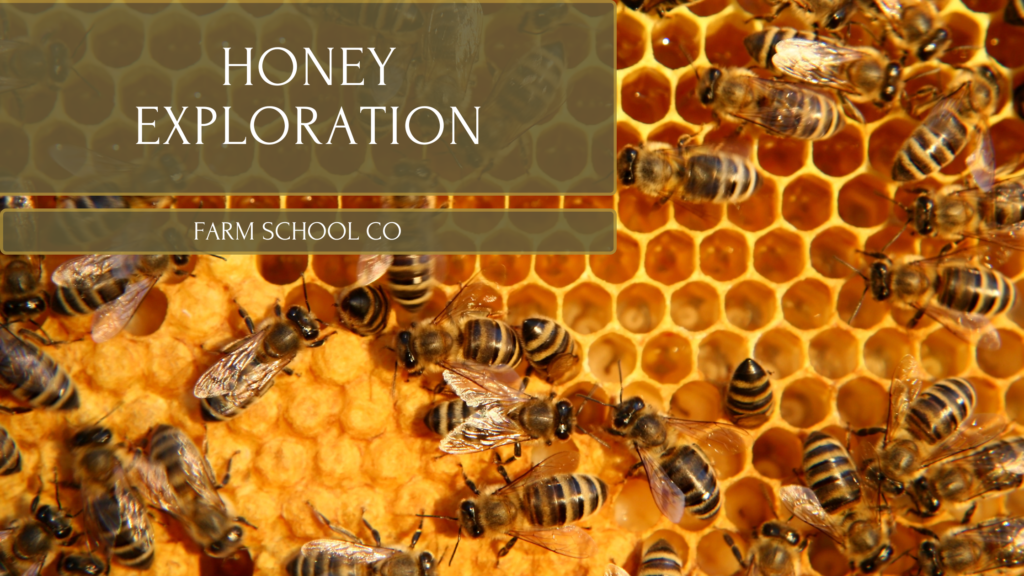
Day 5: Honey Exploration
If appropriate:
- Taste a small sample of honey.
- Compare honey to sugar.
- Observe texture and color.
Optional activity:
- Make a simple honey snack.
Practical connections deepen learning.
Books to Pair with a Honeybee Study
- The Honeybee by Kirsten Hall
- Give Bees a Chance by Bethany Barton
- Are You a Bee? by Judy Allen
Read daily for reinforcement.
Extension Ideas
- Visit a local beekeeper
- Observe bees safely outdoors
- Plant pollinator-friendly flowers
- Create a bee life cycle chart
Follow your child’s interest level.
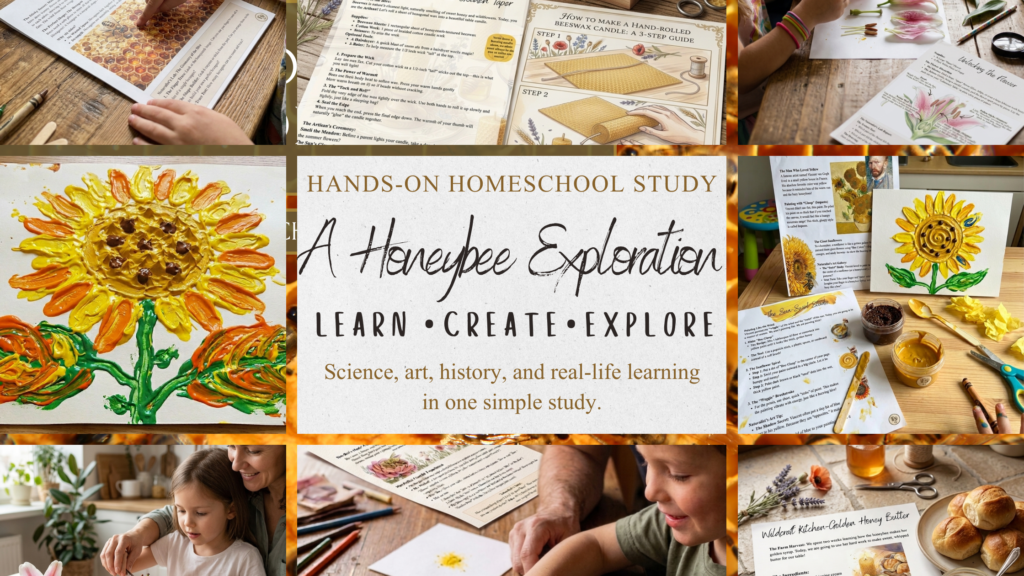
Why a Honeybee Study Is Worth Teaching
A honeybee unit builds:
- Early biology knowledge
- Ecosystem awareness
- Appreciation for nature
- Understanding of food systems
It also pairs naturally with garden studies and spring homeschool themes.
You do not need a complex curriculum. Shop our immersive nature studies full of experiments, activities, and art starting with the honeybee.